During a routine checkup, your dentist in Indianapolis is not just looking for cavities. We’re also screening for something far more serious: oral cancer.
Most people don’t think about oral cancer. They come in hoping for a good cleaning and maybe a little reassurance that their brushing habits are paying off. But those few minutes we spend looking closely at your cheeks, tongue, and throat could save your life.
The Numbers That Might Surprise You
Oral cancer isn’t rare. Nearly 54,000 Americans are diagnosed with it every year. And here’s the tough part: when it’s caught late, the survival rate drops significantly. But when it’s caught early? Treatment is often simpler, less invasive, and far more successful.
The problem is that early-stage oral cancer doesn’t usually hurt. There’s no throbbing pain telling you something is wrong. That’s why so many cases go unnoticed until they’ve progressed. Regular screenings change that.
What We’re Actually Looking For
During your exam, we’re searching for anything that looks out of the ordinary. That might include:
- A sore or ulcer that hasn’t healed after two weeks
- Red or white patches anywhere in your mouth
- A lump, thickening, or rough spot on your gums, tongue, or cheek lining
- Difficulty swallowing or a feeling that something is caught in your throat
- Numbness in any part of your mouth or lips
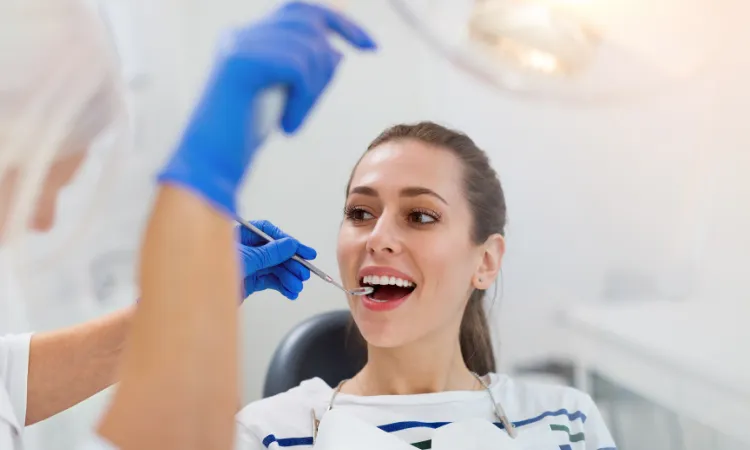
We check your lips. We look inside your cheeks. We ask you to stick out your tongue so we can see its top, bottom, and sides. We feel along your jaw and neck for any unusual bumps or swelling. It takes about two minutes. And it’s completely painless.
Who Should Be Screened?
The short answer: everyone. But some people have higher risk factors than others.
Tobacco use, whether smoking, chewing, or vaping, significantly increases your risk. Heavy alcohol use does too. And in recent years, we’ve seen a rise in oral cancers linked to HPV, which can affect younger adults who don’t have traditional risk factors.
That last part is important. You might not smoke, you might not drink heavily, and you might still be at risk. That’s why we screen every adult patient at every routine visit.
What Happens If We Find Something?
Finding something unusual doesn’t automatically mean cancer. Most spots we discover turn out to be harmless: maybe irritation from a sharp tooth, a canker sore, or simply normal tissue variation.
If we do see something concerning, we don’t panic. We’ll recommend watching it for a couple of weeks to see if it heals on its own. If it doesn’t, we might suggest a biopsy, a simple procedure in which we take a tiny tissue sample and send it to a lab for testing.
Either way, you’ll know what’s happening every step of the way. No surprises. Just clear information and a plan.
A Quick Word About Prevention
You can lower your risk. Avoid tobacco. Limit alcohol. Eat plenty of fruits and vegetables. And if you spend time in the sun, use lip balm with SPF.
But the single most important thing you can do? Show up for your routine dental visits. Those two-minute screenings make all the difference.
Get Your Oral Cancer Screening Today
Our office is located right off Emerson Avenue near St. Francis Hospital, and we welcome patients from Greenwood, Southport, Center Grove, and across Indianapolis. If it’s been a while since your last exam, give us a call at 317-830-0073 or request an appointment online.